CACC’26 Day Four: What We Bring Home Matters Most
Four days of training at the Crimes Against Children Conference in Dallas gave the West Georgia team exposure to new investigative techniques, emerging threats, specialized medical knowledge, prevention strategies, advocacy tools, and difficult conversations about the toll this work can take on professionals.
But on the final morning of CACC’26, the most important question was no longer simply, “What did we learn?”
It was: What are we going to do with it when we get home?
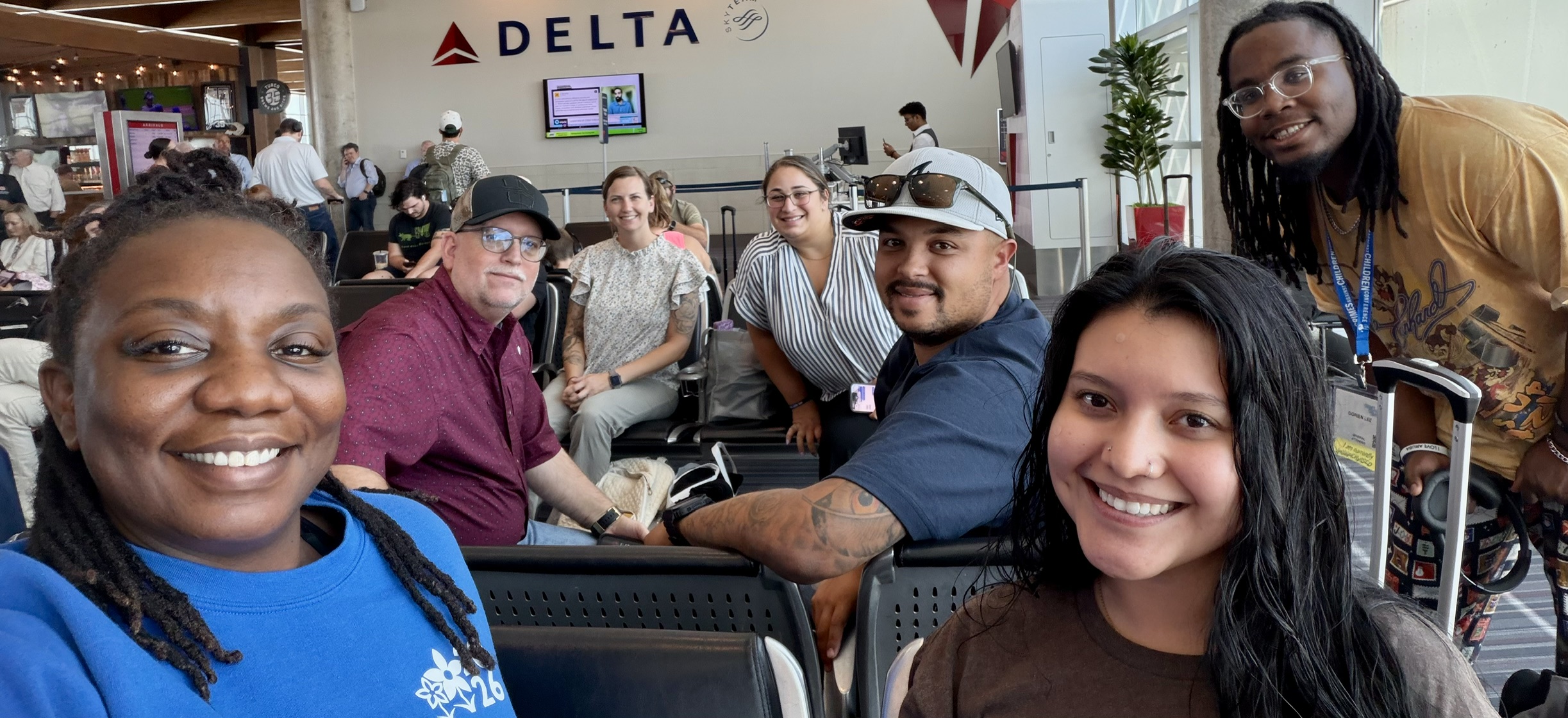
Representatives from West Georgia Child Advocacy Center, Haralson County Sheriff’s Office, Carrollton Police Department, and Bremen Police Department spent Day Four attending their final workshops and identifying specific ideas they intend to carry back into their work with children, caregivers, investigations, and multidisciplinary teams.
When Trusted Adults Become the Risk
Bremen Police Department’s Dalton McKinzie and Brad Richards attended “When the Abuser Is Also a Coach,” examining abuse and grooming within athletic environments.
For Brad, the session reinforced the inherent vulnerability created when coaches occupy positions of trust and authority in young people’s lives.
“Coaches are in a position of authority and have a perfect opportunity for grooming,” he reflected.
Dalton was struck by the number of organizations and resources working to educate young people and prevent victimization before it occurs.
The topic also connected with Halle Rosen’s session, “From Awareness to Action: Preventing Child Sex Trafficking.” Halle highlighted the role of SafeSport and similar systems in recognizing concerns and helping initiate investigations involving Olympic, Paralympic, and club-sport environments.
These sessions reinforced an important prevention lesson: environments built around trust, mentorship, achievement, and access to children can also be exploited by offenders. Effective prevention requires adults to understand grooming behaviors, create clear boundaries, recognize warning signs, and make sure children know where they can turn when something feels wrong.
Brad is already considering one potential next step for West Georgia: exploring whether the K2Know prevention campaign could be incorporated into local schools.
A Medical Examination Is About More Than Evidence
For WGACAC CAC Program Manager Desireé Kendricks, Day Four included “Evidence Collection and Beyond: Decoding Sexual Abuse Medical Examinations.”
One message stood out: most pediatric sexual abuse medical examinations are normal.
That fact can be difficult for caregivers—and sometimes even professionals—to understand. Many forms of sexual abuse do not cause physical injury. When injuries do occur, children’s bodies can heal rapidly and may leave no lasting physical findings.
A normal examination therefore does not prove that abuse did not happen.
Desireé left the session even more confident in explaining the broader purpose of a pediatric forensic medical examination to caregivers and multidisciplinary team partners.
“Yes, they can be for evidence collection,” she explained, “however, they are more for the victim to assist with their healing process.”
A pediatric medical forensic examination can assess a child’s health, document medical history and findings, address concerns about the child’s body, identify treatment needs, and provide reassurance in a private, nonjudgmental setting with a specially trained nurse and advocate.
For Desireé, that is one of the concrete lessons she intends to bring back to West Georgia: helping MDT partners and families better understand why a medical examination can remain valuable even when investigators do not expect to recover physical evidence.
Getting the Full Narrative in a Forensic Interview
Desireé and WGACAC Bilingual Forensic Interviewer and Advocate Mariana Reyes also attended “Following Elements of the Crime in Forensic Interviews.”
The session reinforced the importance of maximizing the opportunity a child has to provide a complete narrative without losing the open-ended, child-centered nature of the forensic interview.
Desireé focused on helping children continue through the end of a narrative and gathering information about what occurred before and after an event. When a child identifies several possible reasons for the interview at once, interviewers must also think carefully about how to sequence topics so needed information can be explored appropriately.
Mariana similarly emphasized open dialogue and narrative responses.
“We should always aim to maximize our time with a child in a forensic interview,” she noted, reinforcing the importance of eliciting narratives that provide the multidisciplinary team with accurate and useful information.
Both are returning with additional techniques they can incorporate into forensic interviewing practice and peer review.
Sometimes the Small Detail Becomes the Big Detail
Several of the law enforcement participants ended the conference reflecting on how the investigative strategies presented throughout the week could translate directly into their cases.
For Dalton, the biggest lesson of CACC’26 was that seemingly insignificant details can ultimately become critical.
A fact gathered during an investigation may initially seem unimportant. Later, it may corroborate another piece of evidence, challenge a suspect’s account, establish a timeline, or become significant at trial.
His action item is simple but important: document the small things so they do not get lost.
Halle reached a similar conclusion.
She plans to be more detail-oriented when investigating child abuse cases, including looking more closely at available video and other evidence that could independently corroborate information provided during an investigation—even something as specific as what a victim or suspect was wearing.
Her larger takeaway from the conference was how quickly child exploitation is changing.
Technology continues to alter how offenders access children, communicate with them, create or distribute abusive material, and conceal their activities. Keeping pace requires investigators to continually strengthen their technical knowledge while remaining grounded in good investigative fundamentals.
Looking Beyond the Child’s Words
WGACAC Rural Child & Family Advocate and Office Lead Dorien Lee attended “Sexualized Anime and Manga: Identification, Trends, and Child Protection Concerns” before returning to “Guardians, Gaslighters, or Gullible? Adult Narratives Affecting the Child Abuse Investigation.”
The first workshop explored harmful and sexualized themes that can appear within some anime and manga content and the child-protection concerns that may accompany them.
The second returned Dorien to a recurring conference theme: a child’s disclosure never occurs in isolation.
Caregivers and other adults can influence whether a child feels safe enough to disclose, how a disclosure develops, and how professionals interpret what a child says. Adults may be supportive, skeptical, intentionally manipulative, confused, or struggling with their own emotions and relationships.
Dorien said the session provided useful tools for situations in which professionals are concerned that a child may have been coached, while also reinforcing the need to ask a broader question:
Why is this person behaving the way they are?
That curiosity matters in advocacy as well as investigation.
Dorien’s biggest conference takeaway was a greater understanding of “how impactful advocacy can be on a family that is lost following their victimization.”
He is returning to West Georgia with new rapport-building tools he plans to put directly into his advocacy work with children and caregivers.
Caring for the People Doing the Work
The final morning also brought an important conversation about burnout.
Dalton, Brad, and Halle attended “Suffer from BURNOUT, Give ’Em the F.I.N.G.E.R.!”, a session that approached a serious occupational challenge with humor while offering practical strategies for professionals regularly exposed to trauma, violence, and high-stakes situations.
Dalton described the work-life balance lesson through the image of juggling different kinds of balls: some responsibilities—family, faith, important relationships and personal well-being—should be treated like glass. Work, by comparison, sometimes has to be allowed to bounce.
His takeaway was the importance of having an outlet and people with whom professionals can talk before the weight of the work becomes overwhelming.
Brad similarly emphasized making time for family and for fun.
Halle’s takeaway was straightforward: when burnout begins creeping in, keep close the things and people that matter.
“Work will always be there tomorrow.”
Mariana encountered the same issue from another perspective during “Invisible Risks: Isolation, Trauma, and Performance in High-Impact Units.”
Her takeaway was that silence itself can become part of the problem.
“A culture of silence is what holds the problem in place,” she said. “We should normalize and speak about the risks that are involved for professionals in our field of work.”
Professionals who investigate child abuse, interview children, support traumatized families, review abusive images, make charging decisions, or repeatedly hear accounts of violence are not unaffected by that exposure. Supporting the workforce is not separate from doing good child-protection work. It helps make sustained, high-quality work possible.
Bringing Day Four—and CACC’26—Home
Across four days, our participants followed different training tracks because their roles within the child-protection response are different.
That is exactly what made the experience valuable.
Investigators strengthened investigative techniques and learned more about evolving forms of exploitation. Forensic interviewers refined approaches for obtaining complete, accurate narratives from children. Advocates gained additional tools for understanding caregivers and supporting families following victimization. Prevention-focused sessions provided ideas that can be taken into schools and communities. Medical training strengthened our ability to explain the healing and healthcare purposes of pediatric forensic examinations. And conversations about secondary trauma and burnout reminded everyone that effective systems must also support the professionals responsible for carrying out this work.
Mariana summarized one of the broadest lessons of the week: combating child exploitation and abuse requires “all disciplines across different agencies to collaborate and take action.”
Desireé’s conference takeaway brought that lesson home to WGACAC.
“We are on the right track at WGACAC,” she said. “We are thinking forward for the families in the West Georgia area.”
That does not mean the work is finished.
It means training like CACC gives us an opportunity to examine what we are already doing, identify what can be strengthened, bring new ideas into our multidisciplinary teams, and continue adapting as the needs of children and families change.
For Dalton, that means documenting details that might otherwise be overlooked.
For Brad, it means exploring new prevention opportunities in local schools.
For Halle, it means using new investigative approaches and looking more deeply for corroborating evidence.
For Dorien, it means strengthening rapport and advocacy with families.
For Desireé, it means helping caregivers and MDT partners better understand pediatric forensic medical examinations while continuing to strengthen forensic interviewing.
For Mariana, it means incorporating new interview techniques, advancing prevention conversations around grooming, and helping create a professional culture where the impact of this work can be discussed openly.
That is ultimately the value of bringing a multidisciplinary West Georgia delegation to the Crimes Against Children Conference.
The conference ends.
The application begins.
WGACAC is grateful to the Dallas Children’s Advocacy Center for bringing thousands of professionals together for the 37th Annual Crimes Against Children Conference and creating a space where investigators, advocates, forensic interviewers, medical professionals, prosecutors, prevention specialists, and other child-serving professionals can learn from one another.
We are equally grateful to Haralson County Sheriff’s Office, Carrollton Police Department, and Bremen Police Department for investing in their professionals and learning alongside us throughout CACC’26.
We came to Dallas as professionals from different agencies and disciplines.
We return to West Georgia as a stronger team—with new knowledge, new tools, and new ideas to put into action for the children and families we serve.