
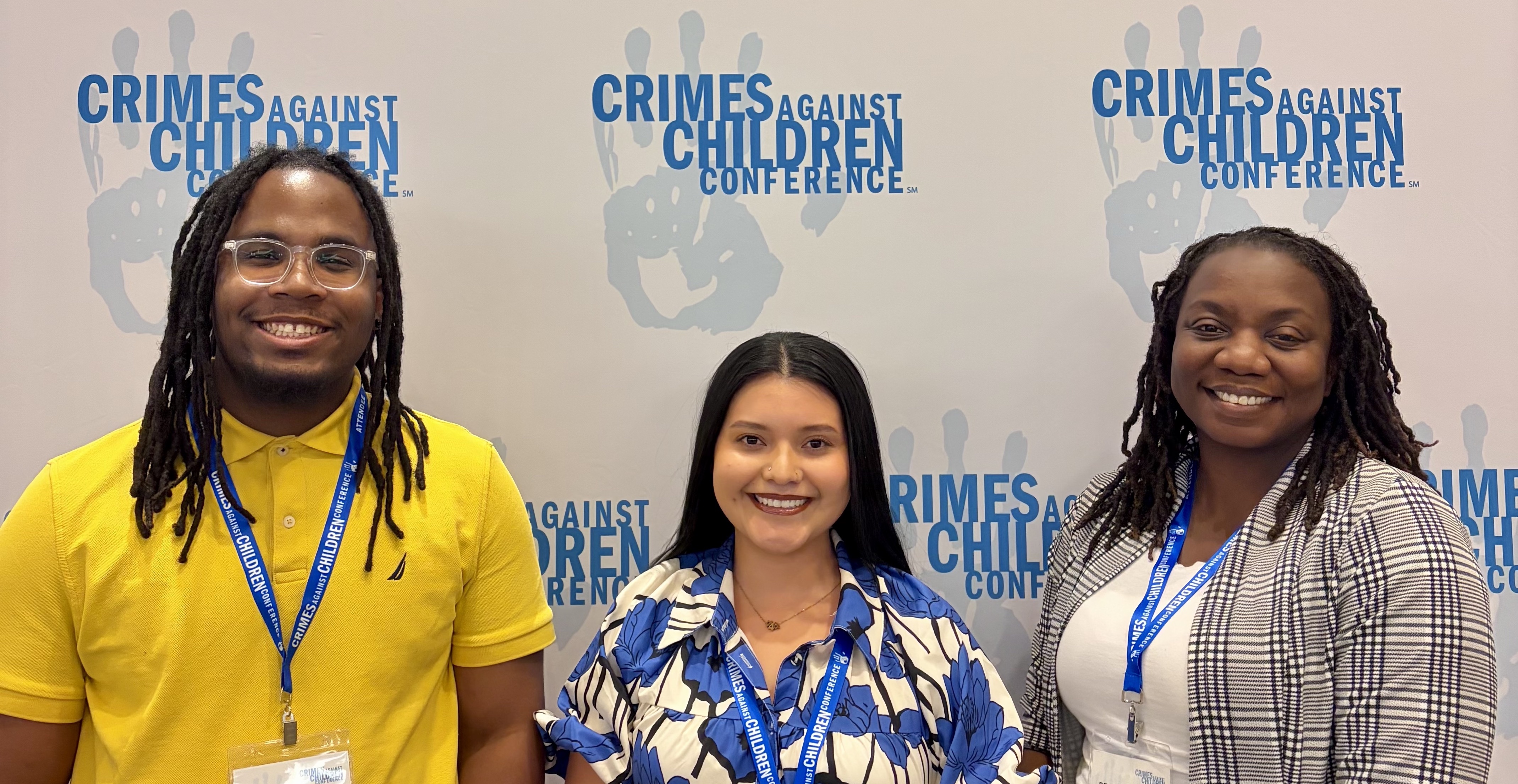
Day Two in Dallas: Turning Training into Action for West Georgia
Day Two of the Crimes Against Children Conference in Dallas challenged the West Georgia team to look more closely, document more thoroughly, ask stronger questions, and continue improving every part of our coordinated response to child abuse.
Representatives from the West Georgia Child Advocacy Center, Haralson County Sheriff’s Office, Carrollton Police Department, and Bremen Police Department participated in specialized sessions covering forensic interviewing, delayed disclosure, medical forensic examinations, digital evidence, online grooming, courtroom testimony, victim support, and child-protection policies.
Across different professional roles and workshop tracks, one message remained consistent: protecting children requires careful listening, thorough investigation, strong collaboration, and a willingness to keep learning.
Building Stronger Cases When Evidence Is Limited
Several members of the West Georgia law enforcement team attended sessions focused on investigating and prosecuting child abuse cases when physical or forensic evidence is limited.
The training emphasized the importance of corroborating the details surrounding a child’s account. Information that may initially seem minor—such as the layout of a room, a conversation, a location, a video recording, or a change in behavior—can become an important piece of the larger investigative picture.
Brad Richards of the Bremen Police Department focused on finding creative ways to strengthen a case using the evidence that is available.
“Use different avenues of investigation. Show details that a child could not fabricate.”
Dalton McKinzie, also with the Bremen Police Department, emphasized the long-term importance of detailed reports and supplemental documentation.
“Documenting even the smallest things can end up saving your case in the long run without you even knowing it.”
Halle Rosen of the Carrollton Police Department noted that investigators must be willing to review all available evidence, even when it does not initially appear relevant. She learned how seemingly unrelated details can form a “puzzle” of corroboration that helps demonstrate the credibility of a child’s account.
Nicole Wilson of the Haralson County Sheriff’s Office also explored techniques for supporting children through forensic interviews, court proceedings, and the aftermath of a crime.
Understanding Grooming, Manipulation, and Online Exploitation
Brad, Dalton, Nicole, and Halle attended an in-depth two-part presentation examining the actions of the first female sexually violent predator identified in Texas.
The case challenged assumptions about who may perpetrate child sexual abuse and demonstrated how offenders can use online communication, emotional dependence, deception, role-playing, and secrecy to manipulate children over time.
Nicole identified the need for parents and caregivers to better understand how predators approach children online.
“Parents need to spend more time preparing their children for online dangers and predators.”
Halle reflected on how technology can accelerate grooming by giving offenders direct and repeated access to young people. Through messaging, role-playing, and social platforms, an offender may gradually create emotional dependence, encourage secrecy, and separate a child from trusted adults.
The sessions reinforced the importance of helping children, caregivers, schools, and youth-serving organizations recognize grooming behaviors before exploitation escalates.
Digital Evidence and Emerging Technology
Team members also received training on digital evidence recovery and investigative technology.
Brad attended a demonstration involving technology that can retrieve information from a phone paired with a vehicle. Dalton and Nicole learned more about Cellebrite, a digital forensic platform used to extract and analyze information from electronic devices.
Dalton was particularly interested in the growing use of artificial intelligence to search and organize large digital evidence returns.
“The AI tool in Cellebrite is a potential game changer.”
These tools can help investigators locate case-relevant communications, images, videos, searches, and other digital information more efficiently. However, the sessions also reinforced that technology does not replace careful investigation. Digital evidence must still be reviewed, documented, interpreted, and placed within the broader context of the case.
Strengthening the Forensic Interview Process
Mariana Reyes of the West Georgia Child Advocacy Center participated in advanced forensic interviewing sessions covering delayed disclosure, reluctance, recantation, rapport-building, nonverbal communication, and follow-up interviews.
One of her most significant takeaways involved the evolving understanding of follow-up and multi-session forensic interviews.
“The goal of a forensic interview is not solely to obtain a disclosure.”
A child may need additional time to build trust, understand questions, manage emotions, or communicate difficult experiences. The training reinforced that a single interview should not automatically be viewed as the only opportunity for a child to provide information.
Mariana also gained new strategies for her forensic interviewing “toolbox” when children are hesitant to speak or when barriers arise during an interview.
Her sessions emphasized the importance of following the child’s lead, validating emotions without influencing the child’s account, recognizing communication barriers, and maintaining rapport throughout the disclosure process.
Preparing Forensic Interviewers for the Courtroom
Desireé Kendricks of the West Georgia Child Advocacy Center attended a two-part workshop focused on strengthening forensic interviewer testimony.
The session offered practical guidance for responding to defense questions, explaining forensic interviewing practices, and avoiding being confined by misleading or overly restrictive questions.
Desireé said the workshop provided valuable preparation for the possibility upcoming court hearings and offered a different perspective on how forensic interviewers can clearly explain their work.
She also attended training on delayed disclosure, an issue commonly encountered in child sexual abuse cases. Children may delay telling because of fear, shame, threats, loyalty to the offender, concern about family consequences, or difficulty understanding what happened.
Helping investigators, prosecutors, caregivers, and jurors understand delayed disclosure is essential to ensuring that a child’s experience is not dismissed simply because the child did not immediately report the abuse.
Medical Examinations Support Both Healing and Justice
One of Desireé’s most important sessions examined how a medical forensic examination can support a child and an investigation—whether the examination occurs minutes, months, or even years after the abuse.
“Every child who makes a disclosure of child sexual abuse should be offered a medical examination.”
A medical examination is not valuable only when physical evidence is expected. The examination can provide reassurance, education, healthcare, and peace of mind for the child and caregiver.
A trained medical professional can explain that a child’s body is healthy, address medical concerns, test or treat when necessary, and help families understand that a normal examination does not mean abuse did not occur.
Medical professionals can also support investigations and prosecutions by educating multidisciplinary team partners and juries about anatomy, healing, delayed examinations, and common misconceptions surrounding physical findings.
Connecting with Teens, Perspective Taking, and Strengthening Policies
Dorien Lee of the West Georgia Child Advocacy Center attended a workshop focused on building relationships with teenagers who appear disengaged, guarded, or reluctant to participate.
He gained practical rapport-building strategies that can support his current advocacy work and his continued development as a forensic interviewer.
“I learned many rapport-building skills that will help me in my advocacy and in my future interviewing.”
Dorien also participated in training on emerging digital threats to youth. The session introduced resources and educational tools that professionals can share with parents and caregivers as they work to understand changing forms of online exploitation.
Dorien attended a session examining the experience of a victim involved in the prosecution of convicted sex offender Robert Kelly.
The presentation explored how high-profile cases can affect victims long after the investigation and trial have ended. It also provided insight into the day-to-day realities faced by victims, prosecutors, advocates, and court personnel during lengthy and highly public proceedings.
Dorien reflected on how deeply the court process can affect young victims and the importance of ensuring that support continues beyond a verdict.
Another of Dorien’s sessions examined sexual abuse within youth-serving organizations.
The training explored how offenders may exploit weaknesses in supervision, reporting procedures, staff training, facility design, communication practices, and organizational culture.
Dorien learned strategies for approaching organizations about possible gaps in their child-protection policies and helping them move from research and recommendations to concrete safeguards.
“I learned a lot about policy work and how to implement research findings into concrete, actionable plans to help protect children.”
Strong policies cannot eliminate every risk, but they can make abuse more difficult to commit, easier to recognize, and more likely to be reported quickly.
West Georgia Is Learning Together
The West Georgia delegation includes:
Desireé Kendricks, Mariana Reyes, and Dorien Lee
West Georgia Child Advocacy Center
Nicole Wilson
Haralson County Sheriff’s Office
Halle Rosen
Carrollton Police Department
Dalton McKinzie and Brad Richards
Bremen Police Department
Each team member attended sessions connected to their individual responsibilities, but the lessons extend across disciplines.
Forensic interviewers need well-trained investigators. Investigators need advocates, medical providers, prosecutors, digital forensic specialists, and supportive community partners. Children and families need every professional involved to communicate, collaborate, and remain focused on safety, healing, and justice.
Bringing the Lessons Home
The value of the Crimes Against Children Conference will not be measured only by the number of sessions attended.
It will be measured by what the West Georgia team brings home:
Stronger forensic interviews.
More detailed documentation.
Better-prepared investigators and witnesses.
More informed advocacy.
Improved child-protection policies.
Greater understanding of medical forensic care.
Stronger collaboration across agencies.
Day Two reminded our team that protecting children requires specialized expertise, careful preparation, and a commitment to continual improvement.
West Georgia is showing up in Dallas—and preparing to put what we are learning into action for the children and families we serve.