
Stronger Together: What West Georgia’s Child-Protection Professionals Brought Home from a Day of Collaborative Training
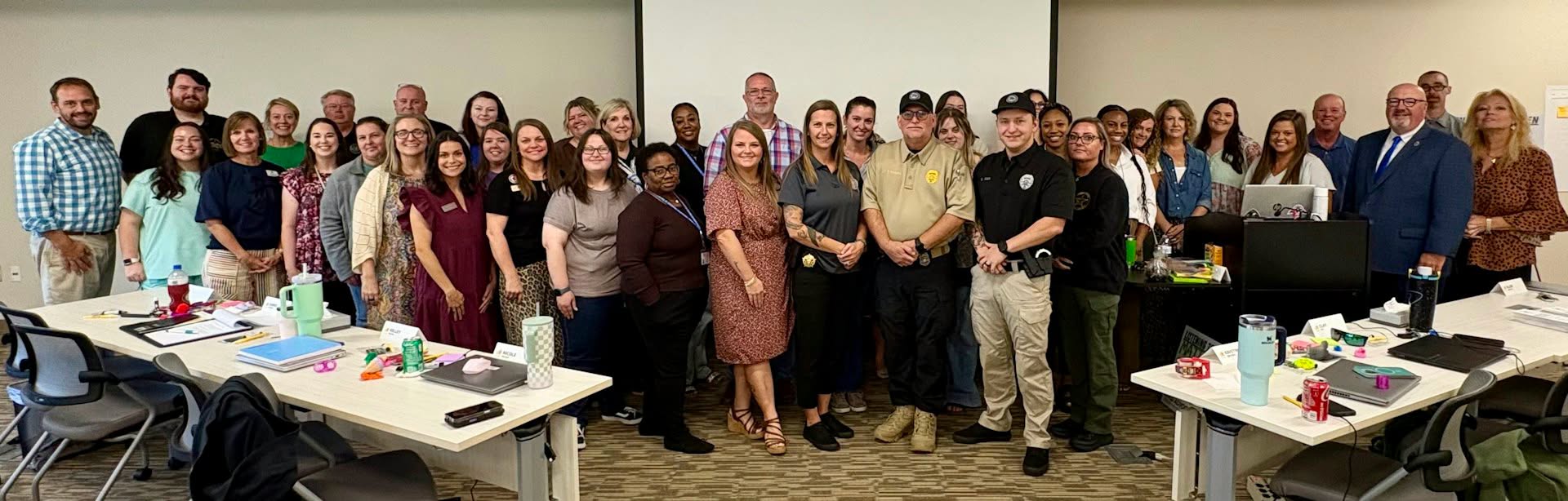
More than 50 professionals from across Carroll, Haralson, and Heard counties recently came together for one shared purpose: strengthening how we respond when a child may have experienced abuse.
Hosted by the West Georgia Child Advocacy Center through CAPTA funding, Strengthening Collaborative Responses to Child Abuse Investigations brought law enforcement, DFCS, prosecutors, forensic interviewers, victim advocates, school personnel, mental-health professionals, public health, CASA, and community partners into the same room for a full day of multidisciplinary training.
That mix mattered.
Child-abuse investigations do not belong to any one agency. Each discipline sees a different part of the case, holds different information, and brings specialized expertise. The work becomes stronger when those pieces are brought together intentionally.
The attendee roster reflected that full system of response, with representation from law enforcement agencies throughout the region, multiple DFCS offices, the District Attorney’s Office, schools, mental health, public health, victim-service organizations, CASA, and WGACAC. Pasted markdown Pasted markdown
Communication Is Part of the Investigation
One of the clearest themes from the day was also one of the simplest:
Communication matters.
Brittany Lilly of Willowbrooke at Tanner said her biggest takeaway was that “collaboration with other MDT members is key in putting all the pieces together for cases.”
Her most important lesson?
“WORK TOGETHER!”
Daniel Keever of the Carrollton Police Department echoed that point, noting that a team working together can strengthen results for children. Aislyn Smith, Victim/Witness Advocate with the Haralson County District Attorney’s Office, emphasized that each discipline has its own role in an investigation—and each role matters to the safety and well-being of the child. Pasted markdown
That is the heart of multidisciplinary work.
Law enforcement, DFCS, prosecutors, advocates, forensic interviewers, schools, medical professionals, and mental-health providers are not doing the same job. But we are often working on the same case, involving the same child, at the same time.
When communication breaks down, so can the response.
Protecting the Child Means Protecting the Interview
Another major takeaway focused on what happens before a child ever sits down for a forensic interview.
Kelsei Poulin of Our House highlighted the importance of what adults say to children before an interview:
“What you say to kids on the way to an FI matter. Don’t promise prizes for them to talk.”
Daniel Keever also reinforced the importance of limiting the number of times a child is interviewed. Pasted markdown
These may sound like small details, but they are not.
Repeated questioning, leading conversations, promises, or pressure can affect both the child and the investigation. Strong MDT practice means gathering enough information to determine safety and next steps—without turning every interaction into another interview.
James Hunt of DFCS pointed specifically to the importance of the minimal-facts process: obtaining information that is specific and useful while remaining concise and determining when CAC intervention is appropriate. Pasted markdown
Building the Case Beyond the Child’s Statement
The training also emphasized stronger investigative technique, including evidence corroboration, suspect interviewing, documentation, offender behavior, and the use of information held by different MDT partners.
Brad Richards of the Bremen Police Department identified new investigative strategies as a key takeaway, while Nicole Wilson of the Haralson County Sheriff’s Office highlighted techniques for interviewing suspects and building rapport during investigations. Pasted markdown
Nicole also identified a practical systems issue that resonated beyond law enforcement: when relevant information becomes available to one partner, the others need to know.
Her recommendation was for case updates to be shared as soon as possible among law enforcement, DFCS, the CAC, schools, and other involved partners when that information is relevant to the investigation. Pasted markdown
That is how stronger cases are built—not by relying on one disclosure or one piece of evidence, but by corroborating information and connecting the pieces held across the MDT.
Technology Is Changing the Landscape
Participants also examined the role technology now plays in child exploitation, grooming, manipulation, and abuse.
Amanda Bailey of DFCS identified one of her most important takeaways as learning more about how offenders may select victims through social media and other online platforms. Pasted markdown
For today’s MDTs, understanding digital environments is no longer optional.
Children’s lives move between physical and online spaces, and investigations increasingly do the same. That means every discipline needs enough awareness to recognize possible digital evidence, preserve information appropriately, and know when specialized investigative resources may be needed.
Training That Feeds Directly Into Our Child Abuse Protocols
This training was also intentionally connected to the work our county MDTs are doing around Child Abuse Protocols.
Participants identified several areas they want to continue strengthening:
- clearer MDT roles and responsibilities,
- timely information sharing,
- current agency contact and resource lists,
- limits on unnecessary repeated interviews,
- stronger minimal-facts practices,
- better understanding of legal authority and investigative procedure, and
- continued cross-disciplinary training.
Kelsei Poulin specifically recommended an updated resource and contact list to help streamline communication. Daniel Keever identified the need for greater understanding of protocol backed by legal authority in child-abuse investigations. Pasted markdown
These are practical recommendations that can move directly from a training room into local protocol, case review, and agency practice.
What Participants Said
The response to the training was exceptionally strong.
Kelsei Poulin described it as:
“One of the best training days I have been to in my 10 years of working with victims.”
She rated the day “10/10.” Pasted markdown
Brittany Lilly called it:
“One of the most well put together trainings I have attended.” Pasted markdown
Amanda Bailey perhaps captured the larger value best:
“I think we need more trainings like this where everyone can be together.” Pasted markdown
We agree.
The Real Impact Happens After the Training
A successful training is not measured only by how many people attended.
It is measured by what happens afterward.
Does a child get interviewed one fewer time?
Does an investigator look for one more piece of corroborating evidence?
Does DFCS know who to call sooner?
Does law enforcement receive information faster?
Does a school professional better understand what to ask—and what not to ask?
Does an MDT member better understand why another discipline is taking a particular step?
Those are the changes that matter.
The strongest takeaway from the day was not complicated:
Know your role. Understand your partners’ roles. Share what matters. Protect the child. Corroborate the evidence. Work together.
Because in child-abuse investigations, collaboration is not something that happens around the case.
Collaboration is how we build the case—and how we better protect the child.